
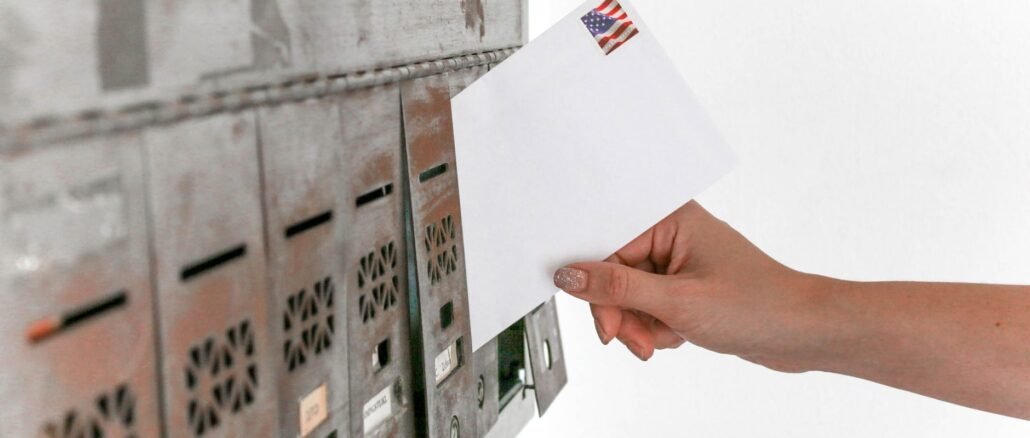
Federal judge presses DOJ on postal service mail voting rules as nationwide block continues
Judge presses DOJ on whether to extend block of USPS mail voting rule
A federal judge is weighing whether to extend a court order that has blocked the U.S. Postal Service from enforcing new mail voting requirements, according to CBS News. U.S. District Court Judge Indira Talwani heard arguments from Department of Justice attorneys defending the rule, which has already been put on hold by multiple federal courts ahead of the November midterms. The rule would impose new requirements on how mail ballots move through the postal system, a process election officials and voting rights groups say millions of Americans rely on every election cycle.
The case is part of a broader legal fight over federal authority to set rules for mail voting, one that began with an executive order from President Trump earlier this year. With the midterms approaching, the outcome will determine whether USPS can impose new ballot-handling standards before voters start returning mail ballots in large numbers.
What the blocked postal service rule would have required
The blocked rule targeted how the Postal Service processes and handles mail ballots, according to court filings referenced in the CBS News report. Courts describing the measure have called it a set of “burdensome requirements” on ballot handling, language used in at least one court order blocking the rule. What those requirements actually entail has itself been a point of dispute in the litigation, with plaintiffs arguing the changes would slow down or complicate ballot delivery during the weeks immediately before and after Election Day, when postmark deadlines and delivery windows determine whether a ballot counts.
Voting rights advocates who challenged the rule argue that any added friction in ballot handling disproportionately affects voters who depend on mail delivery, including rural voters, elderly voters, and military and overseas voters, who often have narrower delivery windows to begin with.
Timeline: from executive order to courtroom fight
The Trump executive order on mail voting
The dispute traces back to an executive order issued by President Trump aimed at changing federal election procedures, including provisions related to mail voting. Critics argue the order attempts to rewrite election rules that fall outside the president’s constitutional authority, since the Constitution gives states and Congress, not the executive branch, primary control over the “times, places and manner” of federal elections.
USPS moves to implement new ballot-handling requirements
Following the executive order, the Postal Service adopted a rule setting new requirements for mail ballot handling, and that rule became the direct target of the litigation now before Judge Talwani and other federal courts. USPS pursued the changes even as legal challenges mounted, arguing the agency has independent authority to set its own operational standards for processing mail, including ballots.
Federal courts step in with temporary blocks
Multiple federal judges intervened before the rule could take effect nationwide. A federal court order temporarily blocked parts of the USPS rule, according to reporting on the case, preventing the agency from enforcing the new requirements while litigation proceeds. Separately, U.S. District Judge Emmet Sullivan issued his own order, also blocking the Postal Service from enforcing the proposed rule. Both blocks have kept the rule from taking effect as the midterm election cycle approaches, leaving the existing mail ballot handling procedures in place for now.
The legal basis for blocking the rule
The 2021 NAACP settlement agreement
Judges blocking the rule have pointed to a December 2021 settlement agreement between the Postal Service and the NAACP governing how the agency handles ballot mail. According to court rulings cited in the reporting, the new USPS requirements violate terms of that settlement, which was designed to ensure timely and reliable delivery of election mail. One ruling found the proposed rule inconsistent with the agency’s obligations under that agreement, giving plaintiffs a concrete contractual basis for the challenge rather than relying solely on constitutional arguments.
Claims that the rule oversteps executive authority
Beyond the settlement dispute, challengers argue the rule oversteps the bounds of executive authority over elections. A separate court ruling barred both federal agencies and USPS from using the president’s executive order to interfere with voter rolls or mail ballots, according to reporting on a related case. That order rests on a legal theory running through the litigation: the executive branch cannot use agency rulemaking, including USPS regulations, to make election policy changes that require action from Congress or the states.
Multiple courts, multiple rulings: mapping the parallel cases
The fight over the USPS mail voting rule is playing out in more than one federal court at once, producing overlapping but distinct rulings. Judge Talwani is deciding whether to extend her own prohibition on the rule, a decision still pending as of the latest hearing. Judge Sullivan, in a separate case, already issued an order blocking USPS from enforcing the rule. A third ruling, addressing the broader executive order, barred federal agencies from using it to interfere with voter rolls or mail ballots at all.
Taken together, the rulings show courts converging on the same practical outcome, blocking enforcement, while relying on different legal grounds: one rooted in the 2021 NAACP settlement, another in claims of executive overreach. That means the rule faces multiple independent legal obstacles rather than a single point of failure. Even if the Justice Department succeeded in narrowing or overturning one ruling, the others would likely remain in place, keeping the rule blocked nationwide.
DOJ’s position and the judge’s questions
Department of Justice attorneys have defended the rule in court, arguing USPS has authority to set its own ballot-handling procedures. During the hearing before Judge Talwani, the judge pressed DOJ on the basis for that authority and on how the rule squares with the Postal Service’s existing obligations under the 2021 settlement agreement, according to CBS News. The exchange captures the central tension in the case: DOJ says the rule is a legitimate operational change within USPS’s discretion, while challengers say it amounts to a substantive policy shift affecting how ballots get delivered, one that requires more than agency rulemaking to implement.
Talwani had not issued a final decision on whether to extend the block as of the hearing. Her ruling, whenever it comes, will determine whether the temporary prohibition continues to hold or whether USPS gains a path to enforce the requirements before the midterm elections.
What happens next if the block is extended through the midterms
If Talwani extends her prohibition, the existing mail ballot handling procedures, the ones in place before the executive order and the USPS rule, will remain in effect through the November midterms. That would preserve the status quo for election officials and voters who depend on mail ballots, avoiding last-minute changes to delivery procedures during an election cycle when timing is critical.
A decision favoring DOJ, by contrast, would open the door for USPS to begin enforcing the new requirements, though the separate rulings from Judge Sullivan and the broader case involving the executive order would likely keep at least partial blocks in place regardless of what Talwani decides. With no timeline given for when she will rule, election officials and voting rights groups are left tracking three separate legal fronts, any one of which could reshape mail ballot handling rules before voters start casting them this fall.
Be the first to comment