
Typhoon Dujuan death toll rises to seven, five still missing after Tokyo-area landslides
The death toll from Typhoon Dujuan rose to seven on Tuesday, with five people still missing, after the storm triggered landslides and flooding across the greater Tokyo area, according to Kyodo News, which cited Japanese authorities. That’s a sharp jump from the four deaths reported just a day earlier, as rescue crews reached areas cut off by collapsed roads and swollen rivers.
The storm tore through Japan’s Izu Islands before pushing into the Kanto region, the densely populated area that includes Tokyo, dumping heavy rain that saturated hillsides already weakened by earlier downpours. Authorities said 22 people were injured in addition to the fatalities, and thousands of homes near the capital lost power as the typhoon moved through.
Storm’s path through the Izu Islands and Kanto region
Dujuan hit hardest in the Izu Islands, a chain of volcanic islands south of Tokyo, before tracking into the Kanto plain, according to phys.org. Kanto is Japan’s most populous region, encompassing Tokyo and its surrounding prefectures, so the storm’s rain and winds affected millions of residents.
The rainfall totals were heavy enough to trigger multiple landslides in the hilly terrain around the capital, a recurring hazard in a country where mountainous and volcanic geology meets dense urban development. Steep slopes near residential areas proved especially vulnerable once the soil became saturated.
Timeline: from landfall to Tuesday’s revised toll
Early reports on the storm described three confirmed deaths and more than 100 people unaccounted for after torrential rains hit a central Japanese city, according to initial wire coverage. Within a day, that toll shifted to four confirmed deaths and 22 injuries, as authorities began downgrading heavy rain and landslide warnings in some areas even as search efforts continued elsewhere.
By Tuesday, the confirmed death toll reached seven, with five people still listed as missing, according to the report from phys.org citing Kyodo News. The numbers moved fast: three dead and over 100 missing, then four dead and 22 injured, then seven dead and five missing, as rescue and confirmation work unfolded over roughly 48 hours while crews reached isolated areas and matched missing-persons reports against recovered remains.
How the death toll climbed from four to seven in 48 hours
The jump from four to seven deaths came as search teams accessed areas that had been cut off by debris and flooding in the immediate aftermath of the storm. Landslide zones required careful, slow-moving excavation work, since unstable ground poses ongoing risks to rescue personnel working near collapsed hillsides.
Government figures place the confirmed toll at seven, according to Kyodo News as reported by phys.org. That number reflects official confirmations processed through Tuesday, a period during which authorities also revised injury counts and continued matching missing-persons reports to recovery efforts on the ground.
Discrepancies between government and NHK reporting
Public broadcaster NHK reported a considerably higher toll than the government figure, citing 10 dead and 16 missing, along with 128 injured, as more details emerged from the disaster zone. That gap, government figures at seven dead and five missing versus NHK’s count of 10 dead and 16 missing, shows how hard it is to tally casualties in the immediate aftermath of a fast-moving disaster spread across multiple prefectures.
Such discrepancies are common in the early phase of large-scale disaster response, when local governments, national agencies, and broadcasters draw on different reporting chains and update timelines. Kyodo News’s figures, the ones cited in the phys.org report central to this story, match the government’s official count of seven dead and five missing as of Tuesday. NHK’s higher tally suggests either additional confirmations reaching the broadcaster’s sources or differences in how missing and deceased are being classified across agencies. Authorities have not yet reconciled the two counts publicly.
Landslides and flooding: where the damage concentrated
The landslides tied to Dujuan struck hardest in the Izu Islands and the hillier parts of the Kanto region surrounding Tokyo, where heavy rain destabilized slopes near residential neighborhoods. Flooding compounded the danger in low-lying areas as rivers swelled beyond capacity, a familiar pattern in Japanese storms where rain-triggered landslides and river flooding tend to strike the same regions in quick succession.
Central Japan also reported severe flooding tied to the storm, with earlier coverage describing torrential rains hitting a city in that area and triggering landslides that left more than 100 people initially unaccounted for. As search efforts progressed, many of those reported missing were located, narrowing the number down to the five still unaccounted for as of Tuesday’s update. The damage in both the outlying islands and the mainland’s Kanto interior shows how far the storm’s rainfall bands extended beyond its immediate coastal landfall point.
Power outages and infrastructure disruption near Tokyo
Roughly 45,000 houses near Tokyo lost power as the typhoon moved through the region, according to earlier reporting on the storm’s immediate aftermath. The outages hit as strong winds and heavy rain battered the Kanto area, straining the electrical grid in one of the world’s most densely populated metropolitan zones.
The scale of the outage, tens of thousands of households without electricity, shows the storm’s reach extended across the Tokyo metropolitan area rather than staying confined to a single district. Restoration timelines for the affected homes were not detailed in available reporting, though the disruption added to the strain on emergency services already responding to landslides, flooding, and search operations across multiple sites at once.
Search and rescue operations for the five missing
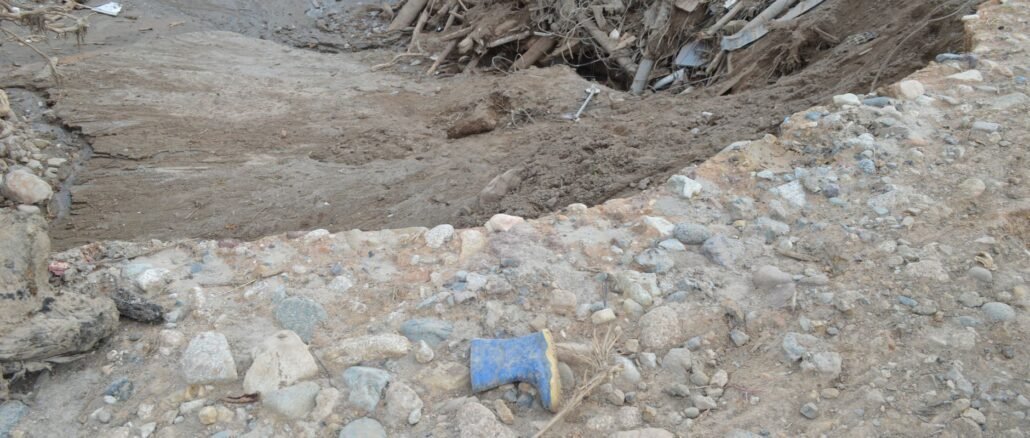
Rescue crews continued working through Tuesday to locate the five people still missing after the storm, focusing on areas where landslides had buried or blocked access to homes and roads. Landslide debris, often a mix of mud, rock, and uprooted vegetation, makes search operations slower and more hazardous than flood recovery in open areas.
Authorities have not released specific locations or circumstances for each of the five missing individuals in the reporting available. The injury count, which stood at 22 in earlier updates before the government’s revised Tuesday figures, shows rescue teams have also been managing a substantial number of non-fatal casualties alongside the search for the missing, stretching emergency medical resources across the affected region.
What happens next: warnings, recovery, and unanswered questions
Japanese authorities began downgrading heavy rain and landslide warnings in parts of the country even as the death toll continued to climb, suggesting the most severe weather danger has passed even though ground conditions remain hazardous. Saturated soil in landslide-prone areas can keep shifting for days after rainfall ends, so slope instability risks are likely to persist in the Izu Islands and Kanto hillsides regardless of clearer skies.
The unresolved gap between the government’s count of seven dead and five missing and NHK’s figure of 10 dead and 16 missing remains the most immediate open question. Until officials reconcile those numbers, the true scale of Dujuan’s toll on Japan will stay uncertain. Residents in the affected areas, meanwhile, face the practical work of restoring power to the tens of thousands of homes still without electricity and rebuilding in neighborhoods where landslides destroyed or damaged property. Authorities have not yet detailed a timeline for full recovery or announced whether additional search resources will be deployed to locate the remaining missing.
Be the first to comment