
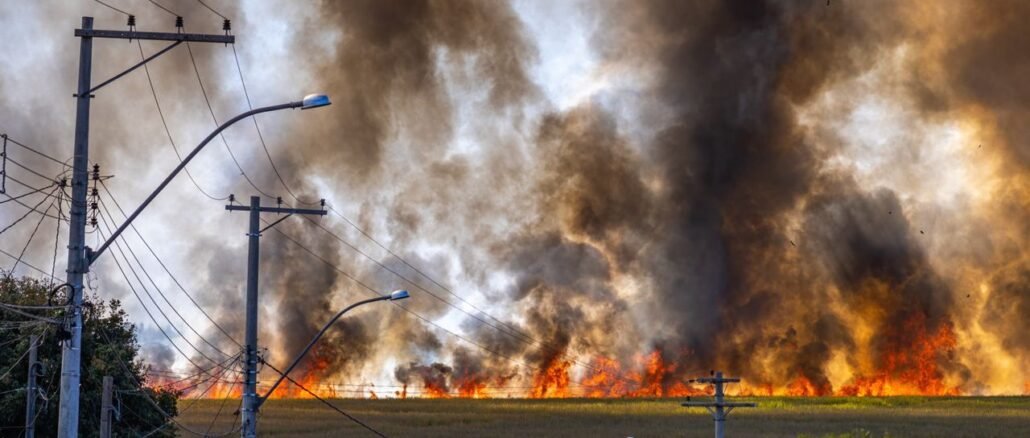
The municipal government of Bilar, Bohol suspended classes at all levels on September 3, 2026, after air quality in the area worsened due to haze drifting in from wildfires burning in Indonesia’s Kalimantan and Sumatra regions. Mayor Norman Palacio’s order covered kindergarten, elementary and secondary students in both public and private schools, according to Currents (Inquirer.net). Bilar joined a growing list of local governments across the central Visayas and Metro Manila that halted in-person classes this week as smoke haze spread across the Philippines.
Mayor Norman Palacio’s suspension order: what it covers and who it affects
Palacio’s directive applies to all school levels within Bilar’s jurisdiction, public and private alike, according to Currents (Inquirer.net) and Bohol Island News. Local officials cited worsening, unhealthy air quality linked directly to the transboundary haze, not any local pollution source, as the reason for the order.
Grade levels and school types included
No student in Bilar attended in-person classes on the day the order took effect. The suspension reaches every grade level, kindergarten through secondary, and applies equally to public and private schools, with no carve-outs by school type.
Effective date and duration of the suspension
The suspension took effect immediately on September 3, 2026, based on the announcement carried by Currents (Inquirer.net) and Bohol Island News. Neither source gave an end date, which suggests the order was an immediate response to deteriorating conditions rather than a planned, fixed-duration closure.
The source of the haze: wildfires in Kalimantan and Sumatra
The haze affecting Bohol originates from wildfires burning in Indonesia’s Kalimantan and Sumatra regions, according to Currents (Inquirer.net). These two regions, on the islands of Borneo and Sumatra respectively, have a history of large-scale land and forest fires, often tied to agricultural land clearing during dry periods. Smoke from these fires doesn’t stay within Indonesian territory. It travels across Southeast Asia and affects air quality in neighboring countries, including the Philippines.
How smoke travels from Indonesia to the central Visayas
Once wildfire smoke enters the atmosphere over Kalimantan and Sumatra, prevailing winds carry it northeast across the Sulu and Celebes seas toward the Philippine archipelago. By the time it reaches the central Visayas, including Bohol and Cebu, the haze has traveled hundreds of kilometers, arriving as a diffuse layer of particulate matter that cuts visibility and degrades air quality readings even without any local fire source. That’s why island provinces like Bohol, far from the original fires, still recorded unhealthy air conditions severe enough to shut schools.
Bohol’s suspension in context: Cebu, Quezon City and other LGUs act too
Bilar wasn’t alone. On the same day, September 3, several local government units in Cebu suspended face-to-face classes in public schools as air quality worsened across the region. In Bohol, the haze had already prompted local officials to act, according to a separate report on Cebu City’s suspension. The overlapping timeline in Bohol and Cebu shows the haze event wasn’t limited to one town. It hit a wider stretch of the central Visayas at the same time.
Cebu City’s two-day class suspension and the hazardous 215 air quality index reading
Cebu City Mayor Nestor Archival announced a two-day suspension of in-person classes as haze from the Indonesian wildfires persisted over the region. Metro Cebu’s air quality index spiked to a hazardous reading of 215 on September 2, 2026, according to a report on the thick haze covering the metro area. Health agencies classify that level as hazardous, meaning it can affect even healthy people, not just those with existing respiratory conditions.
Quezon City sensors and the Luzon response
The haze’s reach wasn’t limited to the Visayas. In-person classes in all public schools in Quezon City were suspended after local sensors recorded hazardous air pollution levels, according to a report on the city’s response. Quezon City sits more than 600 kilometers north of Bohol, and its own hazardous readings and class suspension show just how widely the wildfire smoke spread across the Philippines in early September 2026.
Health risks of prolonged haze exposure
Haze made up of wildfire smoke carries fine particulate matter that can penetrate deep into the lungs and, in some cases, enter the bloodstream. Exposure is linked to respiratory irritation, aggravated asthma and cardiovascular strain, particularly with prolonged or repeated exposure. Children, the elderly and people with existing heart or lung conditions face the highest risk from the hazardous readings recorded in Cebu and Quezon City this week.
Guidance from health experts on precautions for children and vulnerable groups
Experts urged caution amid the thick haze covering parts of the Philippines, according to a report by ANC. The available reporting doesn’t detail specific medical protocols issued for this event, but general public health guidance during haze episodes typically calls for limiting outdoor activity, keeping windows closed and using masks when air quality worsens sharply. These precautions matter especially for schoolchildren and other vulnerable groups when air quality indices reach hazardous levels.
What happens next in Bilar and Bohol
Local officials haven’t announced when in-person classes in Bilar will resume, based on available reporting. The suspension was framed as a direct response to current conditions, which suggests local authorities see the decision as tied to how quickly the haze clears rather than to a fixed calendar date.
Conditions for resuming in-person classes
No published timeline exists yet for lifting the suspension in Bilar. Similar suspensions elsewhere, such as Cebu City’s two-day order, were issued with defined durations, so Bilar’s open-ended suspension suggests officials are waiting for clearer confirmation that air quality has returned to safer levels before letting students back into classrooms.
Monitoring of air quality levels by local authorities
Local governments across the affected regions, including Cebu and Quezon City, relied on air quality sensors and index readings to justify and calibrate their responses. Metro Cebu’s reading of 215 was the trigger cited for its own two-day closure. This kind of monitoring is likely the standard basis officials in Bilar and other affected municipalities will use to decide when conditions have improved enough to reopen schools.
Broader pattern: transboundary haze and recurring air quality emergencies in the Philippines
The September 2026 haze episode, affecting Bilar and Cebu in the Visayas as well as Quezon City in Metro Manila, fits a pattern that recurs in the region: wildfires in Indonesia’s Kalimantan and Sumatra periodically send smoke across national borders, forcing school closures and health warnings in the Philippines even though the fires burn hundreds of kilometers away. With no fixed end date yet announced for Bilar’s suspension, the next thing to watch is whether air quality index readings across Bohol and Cebu drop back into safer ranges, the same threshold that triggered Cebu City’s two-day shutdown and Quezon City’s sensor-based response this week.
Be the first to comment