
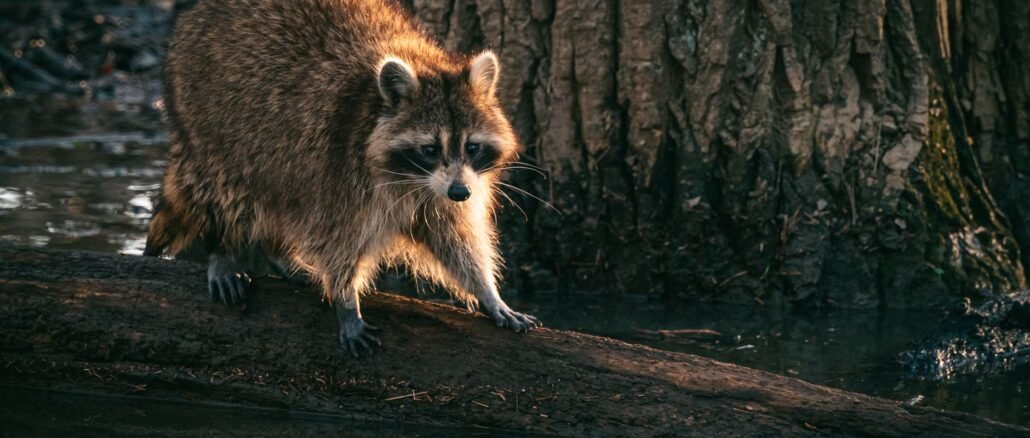
Woodside Wildlife Rescue in Mississippi has developed a training program for abandoned and injured baby raccoons, giving the animals a structured path back into the wild rather than a permanent life in captivity. Staff at the center call it “raccoon boot camp,” according to Currents. The name fits: the goal is to teach orphaned kits the skills they would normally learn from their mothers, then release them once they can fend for themselves.
The kits that arrive at Woodside typically have no adult raccoon to model behavior after. In the wild, young raccoons learn to communicate, forage, and avoid danger by watching and mimicking their mother over several months. Without that guidance, hand-raised kits risk entering the wild unprepared, unable to find food or recognize threats. Woodside’s program exists to close that gap.
Inside Woodside Wildlife Rescue’s training method
Staff at the center act as substitute mothers, using specific techniques to replicate what a wild raccoon parent would teach. The approach relies on repetition and mimicry, giving kits repeated exposure to the sounds and behaviors they will need once released.
Mimicking raccoon calls to teach communication
Woodside staff imitate the vocal calls raccoons use with each other, according to Currents. Raccoons rely on a range of chirps, growls, and other sounds to communicate with kin and warn of danger. By reproducing these calls, staff give orphaned kits exposure to a communication system they would otherwise miss without a mother or littermates around to teach them.
Hiding worms in dirt to build foraging instincts
Staff also bury worms in dirt for the kits to dig up, according to Currents. This exercise builds the foraging instinct raccoons depend on in the wild, where much of their diet comes from digging and probing rather than finding food out in the open. Teaching kits to dig for hidden food mimics a skill a mother raccoon would otherwise pass down directly.
Why abandoned and injured kits need survival training before release
Raccoon kits that end up at Woodside arrive either abandoned by their mothers or injured and unable to survive on their own without intervention. In either case, they miss the extended period of maternal instruction that wild raccoons rely on to develop basic survival skills. A kit raised entirely by humans, without deliberate training, would face release into the wild with gaps in its ability to find food, communicate with other raccoons, or respond to threats.
The boot camp model addresses this by structuring rehabilitation around specific, repeatable lessons rather than simply feeding and housing the animals until they’re old enough to release. The goal isn’t just to keep the kits alive during their time at the center. It’s to make sure they can keep themselves alive afterward.
What the program says about the broader challenge of wildlife rehabilitation
Wildlife rehabilitation centers face a persistent problem: an animal raised by humans, however well cared for, doesn’t automatically know how to live in the wild. Feeding, sheltering, and medically treating an injured or orphaned animal solves the immediate crisis, but it doesn’t replace the education a wild parent would provide over weeks or months.
Woodside’s approach, mimicking calls and hiding food, is part of a wider shift in wildlife rehabilitation toward teaching by example rather than passive care. Rather than treating rehabilitation as a holding period before release, the program builds specific skills into the timeline, so that by the time a kit is ready to leave, it has already practiced the behaviors it will need. That difference, between simply surviving captivity and being prepared for release, separates a successful rehabilitation from one that sets an animal up to fail once it’s back in the wild.
The stakes for raccoon kits without this kind of preparation
A raccoon released without these skills faces a difficult transition. Foraging isn’t instinctive in the sense that a kit will automatically know where or how to dig for food. It’s learned, refined through practice, which is why Woodside stages exercises like burying worms in dirt rather than simply feeding the animals in a bowl.
Communication carries similar stakes. Raccoons that can’t interpret or produce the calls used by others of their species may struggle to navigate encounters with wild raccoons after release, whether those encounters involve competition for territory, food, or avoiding conflict. Preparing kits with these skills before release, rather than after, is the premise behind Woodside’s program.
How the story fits into wildlife rescue efforts in the region
Woodside Wildlife Rescue’s boot camp is one center’s specific solution to a challenge shared across wildlife rehabilitation: giving hand-raised animals a genuine chance at independent survival, not just a return to their natural habitat. The program’s methods, mimicking calls and staging foraging exercises, are designed to replace what a missing or injured mother raccoon would have taught over time.
For Woodside, the measure of success isn’t how many kits pass through the center. It’s how many go on to live, forage, and communicate on their own once they’re released.
Be the first to comment