
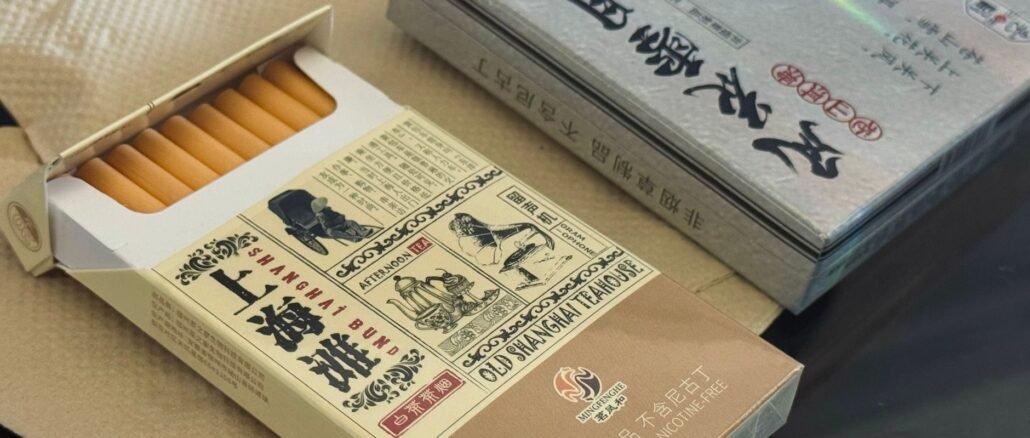
Khalid Baker, a former boxer who spent decades publicly maintaining he was wrongfully convicted of murder, has been identified as the alleged head of a large illicit tobacco network reportedly worth millions of dollars, according to The Age. Baker has left Australia, the report states, as authorities examine the operation he is accused of running.
For years, Baker’s name circulated in Victoria as a case people pointed to when arguing the legal system had gotten it wrong. Now it’s attached to a criminal investigation of a different kind entirely: the black market trade in cigarettes and tobacco products that has expanded rapidly across Australia in recent years.
From prison cell to public symbol: the murder conviction that defined Baker’s public life
The original case and the decades-long innocence campaign
Baker was convicted of murder over the death of a man, a conviction he protested publicly for decades, according to The Age. The specifics of the original trial, the evidence presented, and the identity of the victim haven’t been detailed in reporting on his current case. But the length and visibility of Baker’s campaign help explain why his re-emergence as a tobacco figure has drawn attention.
People convicted of serious crimes running public innocence campaigns isn’t unusual. Sustained, decades-long efforts that actually gain public traction are rarer. Baker’s case reportedly fell into that category, building a profile around him as someone potentially failed by the justice system rather than as a convicted killer.
How Baker’s conviction became a rallying point in Victoria
Baker’s case became a point of public debate in Victoria, according to The Age, and his boxing background gave his story a profile beyond that of a typical appeal. Cases involving athletes convicted of serious crimes tend to draw more media coverage and public scrutiny than similar cases involving private individuals, partly because there’s already a public record, a fan base, or a media narrative to build on.
For years that visibility worked in Baker’s favor, casting him as someone whose conviction deserved renewed scrutiny rather than someone whose guilt was settled. The Age’s reporting doesn’t detail whether Baker’s conviction was ever overturned, reduced, or upheld on appeal, only that he maintained his innocence publicly for a long period.
The allegations now: inside the illicit tobacco operation authorities link to Baker
Scale and value of the alleged network
The network allegedly linked to Baker is described by The Age as worth millions of dollars. Illicit tobacco has become one of the fastest-growing organized crime problems in Australia, driven largely by steep increases in tobacco excise taxes that have pushed legal cigarette prices well above what many smokers are willing to pay, creating a gap black market suppliers have moved to fill. Networks of this kind typically involve importation, unlicensed retail distribution through shopfronts, and cash transactions designed to dodge tax and regulatory detection.
The Age’s reporting doesn’t specify the exact structure, geographic reach, or product volume of the network tied to Baker, but describes it as “major,” putting it among the larger illicit tobacco operations to have drawn public attention in the country.
Baker’s alleged role at the top
Baker is alleged to be the head of the operation, according to The Age, rather than a lower-level participant. That distinction matters in cases involving organized illicit trade networks, where prosecutions often target a hierarchy of importers, distributors, and retail-level sellers. Being named as the alleged head puts Baker at the top of that structure, at least in the allegations reported so far.
No further detail on the mechanics of his alleged involvement, such as how long the network is alleged to have operated or how it was allegedly financed, has been made public in the reporting available.
Departure from Australia: what is known about Baker’s current whereabouts
Baker has left Australia, according to The Age, though the report doesn’t specify his current location, the date of his departure, or whether that departure happened before or after authorities began examining the alleged tobacco network. His departure matters because it raises the question of whether he left the country in connection with the allegations or independently of them.
No details are available on whether Baker faces active charges related to the tobacco allegations, whether a warrant has been issued, or whether authorities are seeking his return to Australia. Those are among the biggest unanswered questions in the case as reported.
From cause celebre to suspect: how public perception of Baker has shifted
Baker’s public identity for decades rested on the claim that he was wrongfully convicted, a status that earned him sympathy and support as a potential victim of the justice system. The tobacco allegations turn that narrative on its head, alleging instead that he built a large-scale criminal enterprise. The Age’s headline frames it as a shift from “cause celebre” to “alleged tobacco boss,” a stark reversal for a wrongful conviction case in recent Australian reporting.
Reactions from supporters who once championed his innocence
The Age’s reporting doesn’t include specific statements from individuals or organizations who previously supported Baker’s innocence campaign. How that support network has responded, or whether it has responded publicly at all, remains unclear based on available reporting. That silence stands out, given how much public advocacy helped keep Baker’s case in view over the years he protested his conviction.
Why this case differs from other “wrongfully convicted boxer” stories
Clarifying the confusion with Rubin “Hurricane” Carter’s case
Baker’s story invites comparison to Rubin “Hurricane” Carter, the American middleweight boxer whose wrongful murder conviction became one of the most famous cases of its kind in the 20th century. Carter spent 19 years in prison before the charges against him were dismissed, and his case became an international symbol of racial injustice, inspiring Bob Dylan’s song “Hurricane” and later a feature film. Carter’s conviction was ultimately overturned, and he went on to advocate for criminal justice reform before his death at age 76.
Baker’s case is different in ways that matter. There’s no indication in current reporting that Baker’s murder conviction was ever overturned or that he was exonerated; he “maintained” his innocence, according to The Age, which is not the same as having that innocence legally established. More importantly, Carter’s post-conviction life was defined by advocacy work, not by allegations of leading a new criminal enterprise. Baker’s re-emergence as the alleged head of an illicit tobacco network sets his story apart from the pattern Carter established, where a wrongful conviction victim becomes a public figure for justice reform rather than the subject of a fresh criminal investigation. Conflating the two cases risks misunderstanding what’s actually being alleged against Baker: not a continuation of his fight against a past conviction, but a separate, new set of criminal allegations.
What happens next: investigation status and unanswered questions
The Age’s reporting confirms the core facts: Baker’s decades of protesting his murder conviction, the emergence of allegations that he now heads a multimillion-dollar illicit tobacco network, and his departure from Australia. Beyond that, the reporting doesn’t specify who is leading the investigation into the alleged network, whether formal charges have been laid, or what legal process, if any, is underway to address his current whereabouts.
Australia’s illicit tobacco trade has grown fast on the back of rising excise taxes and increasingly organized supply chains, so cases like this one tend to draw sustained attention from tax and law enforcement authorities regardless of an individual’s prior legal history. Whether Baker returns to Australia to answer questions about the network, and what happens to the murder conviction that once defined his public reputation, are the questions now hanging over the case.
Be the first to comment