
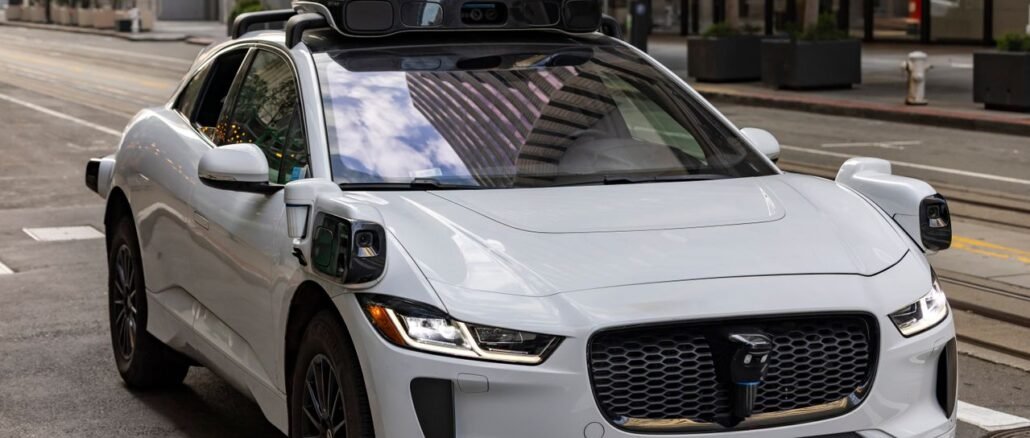
Uber riders in London can now hail a self-driving car through the Uber app. The launch, announced Thursday by Uber and British AI firm Wayve, makes London the second European city with an operating robotaxi service, according to reporting on the launch.
The vehicles carry a human safety driver in the front seat for now, ready to intervene if the AI system misjudges a junction or a cyclist. The driving itself, from lane positioning to roundabout negotiation, is handled by Wayve’s software. That distinction, supervised autonomy rather than full driverlessness, defines this early phase of the rollout.
What launched: safety drivers still onboard, but AI runs the wheel
The service works through the existing Uber app, with no separate download required. Riders who get matched with a Wayve-powered vehicle see the same booking flow as a standard Uber trip, except a trained safety operator sits in the driver’s seat as a backup rather than an active chauffeur.
This setup mirrors how Waymo and other operators first tested driverless technology in U.S. cities before removing the human entirely. London’s launch keeps that human safeguard in place, given both the regulatory environment and the complexity of the roads Wayve’s system has to read in real time.
The Wayve technology: trained on London roads since 2018
Wayve didn’t build its self-driving system on Phoenix’s grid layout or a closed test track. The company has been testing autonomous driving technology on London’s streets since 2018, according to Wayve’s own account of the rollout. That means the city’s chaotic road network shaped its AI training data from the start rather than getting bolted on later.
That approach separates Wayve from rivals who rely heavily on pre-mapped routes and geofenced zones. Wayve’s system uses an end-to-end AI model that learns driving behavior directly from sensor data and real-world scenarios, rather than following hand-coded rules for every possible road situation. Seven years of exposure to London’s buses, cyclists, and unpredictable pedestrian crossings has shaped how the model responds to ambiguity, the kind of judgment call a rule-based system tends to struggle with.
Why London’s roads are a tougher test than Phoenix or Austin
Robotaxis have operated in U.S. cities for years now, largely without major incident, but London’s road network poses problems that Sun Belt grids simply don’t have. The centuries-old roads in the UK capital present challenges that Los Angeles or Phoenix never had to solve, according to coverage of the launch, because London wasn’t designed. It grew, street by street, over roughly two thousand years.
Phoenix and Austin, where Waymo and other operators run driverless fleets, sit on wide, rectilinear grids built in the twentieth century with cars already in mind. London’s layout predates the automobile by centuries. Medieval lanes intersect with Victorian thoroughfares and modern arterial roads, often with no consistent logic connecting them.
Roundabouts, narrow lanes and centuries-old street layouts
Roundabouts are the clearest example of the gap. London’s junctions frequently combine multi-lane roundabouts with merging traffic, cyclists cutting across lanes, and pedestrians crossing mid-flow. That kind of scenario requires constant, split-second negotiation rather than following a fixed right-of-way rule. Narrow residential streets add another layer: many were laid out for horse and cart traffic, not two-way car travel, forcing vehicles to squeeze past parked cars, delivery vans, and oncoming traffic at the same time.
Wayve’s seven years of London-specific training exist precisely to handle this. A system trained on Phoenix’s grid would need substantial retraining, if not a ground-up rebuild, to cope with a Camden side street or a roundabout near Elephant and Castle.
The regulatory path: private hire licences and the UK’s approach to self-driving trials
Wayve secured private hire vehicle licences before putting any vehicle on a London street with a paying passenger inside, according to reporting on the run-up to the launch. That licensing route, the same one that governs London’s minicab and ride-hailing operators, gave regulators an existing legal framework to slot the new service into, rather than requiring an entirely new category of permit.
The UK government has been building toward this moment for several years, developing rules for automated vehicle trials that allow supervised testing on public roads ahead of any move to full driverlessness. London’s launch operates within that framework, with the human safety driver acting as the bridge between AI-only vehicle sales pitches and today’s licensed, monitored reality on the road.
London joins a short list of European robotaxi cities
London becomes the second city in Europe with an operating robotaxi service, according to reporting on the launch, joining a small group of cities where autonomous ride-hailing has moved from pilot project to public product. That puts London ahead of most major European capitals, where regulatory caution and denser, older infrastructure have kept robotaxis largely confined to closed trials or limited testing zones.
The UK’s willingness to license Wayve for private hire operation, combined with Uber’s existing ride-hailing infrastructure already embedded in the city, gave this launch a faster path to market than a from-scratch robotaxi operator would have had. Uber supplies the demand-matching platform and rider base it has built over more than a decade in London; Wayve supplies the driving.
What riders can expect right now
Booking a robotaxi ride currently looks identical to booking any other Uber trip, according to descriptions of the rider experience at launch. Riders open the app, request a ride, and may be matched with a Wayve-powered vehicle depending on availability and route. The presence of a safety driver means the front seat isn’t empty, unlike the driverless robotaxis now running in parts of the U.S., but the car steers, brakes, and accelerates on its own for the bulk of the trip.
Early riders have described watching an AI system navigate live London traffic, including roundabouts and narrow lanes, as a marked departure from anything previously available through a standard ride-hailing app, according to first-hand accounts from the launch.
Where the service operates and how to book
The service launches within London, accessible through the standard Uber app rather than a separate platform. No additional signup or specialized app is required for riders already using Uber, which lowers the barrier to a first ride compared with services that require dedicated apps or waitlists.
Coverage at launch has not detailed the full geographic boundaries of the operating zone, though the rollout is described as an initial phase, suggesting the service area may expand as Wayve and Uber gather more real-world data from London traffic.
The road ahead: from supervised rides to fully driverless
The safety driver in the front seat is a feature of this phase, not a permanent fixture. Uber and Wayve’s stated trajectory follows the same pattern set by Waymo in the U.S.: supervised rides first, then a gradual handover to fully driverless operation as the technology accumulates road hours and regulators gain confidence in the data.
London’s complexity (roundabouts, narrow historic lanes, unpredictable pedestrian and cyclist behavior) means that timeline is unlikely to move as fast as it did on Phoenix’s grid streets. Wayve’s seven years of London-specific training data gives it a head start no competitor entering the city cold would have. Whether that’s enough to convince UK regulators to remove the human backup entirely is the next test, and it’s a considerably harder one than getting a car around a roundabout without hitting the kerb.
Be the first to comment