
Edythe Colton Harrison, who founded the Virginia Opera in 1974 and later became the first woman nominated statewide by Virginia Democrats, died on September 1, 2026, according to Currents. She was 91.
Harrison’s death was reported by multiple Norfolk-area outlets, including an obituary that described her as “a Virginia civic leader, arts advocate, legislator and political pioneer.” Her career spanned two arenas, opera and politics, and in both she left a mark on Hampton Roads that outlasted her time in office or on the opera board.
Founding the Virginia Opera in 1974
In 1974, Harrison led a group of community leaders who founded the Virginia Opera Association, according to the Library of Virginia’s Virginia Women in History project. She served as the organization’s founding president, a title that stuck to her name in nearly every subsequent account of her life.
The opera company didn’t start with a custom-built theater. It started with fundraising and a repurposed venue.
From municipal auditorium to Harrison Opera House
Harrison and her fellow founders raised the money needed to convert Norfolk’s Center Theater, part of the city’s Municipal Auditorium complex, into a working home for opera performances, according to Clio’s Virginia Women in History Hampton Roads Region entry. That conversion gave the fledgling Virginia Opera Association a physical base at a time when the organization had little more than ambition and community backing.
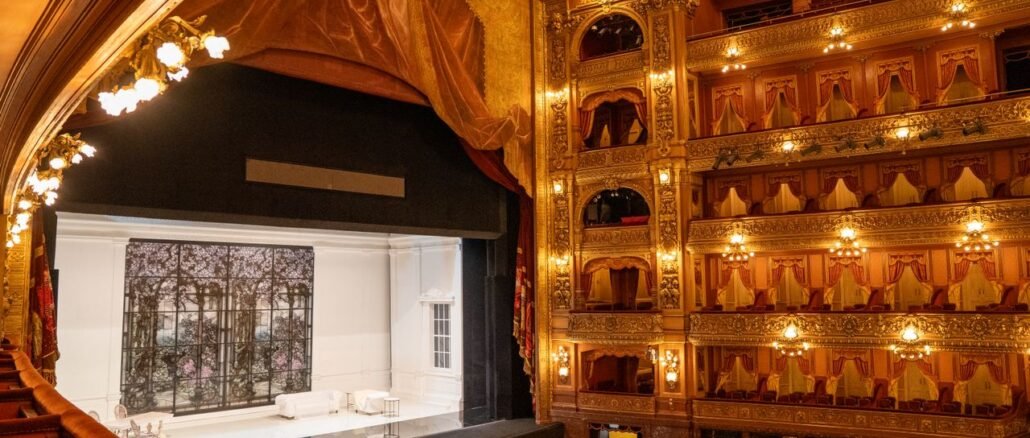
The venue eventually took her name. What began as a converted auditorium theater became the Harrison Opera House, in recognition of the role she played in getting the company off the ground and keeping it there. The building later became the site of a public lecture series honoring her contributions.
A pioneering run in Virginia politics
Harrison’s public life didn’t stop at the opera house. She moved into elected office in 1980, when she won a seat in the Virginia House of Delegates, according to the Library of Virginia. That transition from arts administrator to state legislator marked the start of a political career that would culminate in one of the more closely watched statewide campaigns of the era.
She built a reputation as someone willing to take on difficult races rather than settle for safe ones.
First woman nominated statewide by Virginia Democrats
Harrison became the first woman nominated statewide by the Virginia Democratic Party, a distinction noted in coverage of her death, including a report from Memories Mortuary. That nomination came during a U.S. Senate run, placing her at the top of a statewide ticket in a way no woman from her party had achieved before in Virginia.
Her 1980-1983 term in the House of Delegates and the 1984 Senate bid against John Warner
Harrison served in the House of Delegates from 1980 to 1983, according to Wikipedia’s entry on her. Sources differ slightly on the exact end date: the Library of Virginia lists her service through 1982, but the core record is consistent. She held the seat for roughly three years before turning her attention to a bigger race.
In 1984, Harrison ran for the U.S. Senate against incumbent Republican John Warner. A Suffolk News-Herald article from November 4, 1984, described Warner as leading “Democrat Edythe Harrison, a former” delegate, in coverage published as the race unfolded. A separate profile, “Edie Harrison, Against All Odds,” characterized her at the time as a “50-year-old former state delegate, founder of the Virginia Opera Association,” and noted that she lost the race, but only after waging a serious campaign against a well-established incumbent. Warner won reelection, but Harrison’s candidacy showed how far she had moved from her roots in Norfolk’s arts community into the top tier of state politics.
Life before public office
Harrison’s path to founding an opera company and running for the U.S. Senate started decades earlier, in the same city she would spend her life shaping.
Born September 17, 1934, in Norfolk
Edythe Colton Harrison was born September 17, 1934, in Norfolk, Virginia, according to Wikipedia. She lived to 91, meaning her death on September 1, 2026, came just over two weeks before what would have been her 92nd birthday. Norfolk remained the center of her life’s work, from the founding of the Virginia Opera to her eventual recognition as one of the city’s defining cultural figures.
Recognition as a Norfolk cultural icon
Harrison’s standing in Norfolk went beyond her opera and political résumés. She was described as “a cultural icon in Norfolk” in materials tied to a lecture series held in her honor, a label that fit how closely she’d become identified with the city’s civic and artistic life over her decades of public service.
That identification was formalized in a specific event held at the venue that bears her name.
The Thomas Jefferson lecture at Harrison Opera House
A Thomas Jefferson lecture was held at the Harrison Opera House, with materials describing Harrison as a cultural icon in Norfolk who was also a member of the Virginia House of Delegates and the founding president of the Virginia Opera. The lecture took place inside the very building that grew out of her 1974 fundraising campaign to convert a municipal theater into a working opera venue.
Death and immediate reaction
Harrison’s death drew coverage from Norfolk-area news outlets and obituary services within days of her passing.
Date and location of her passing
Harrison died on September 1, 2026, according to Wikipedia and corroborated by an obituary published for Edythe Colton Harrison. The obituary states she “passed away peacefully” on the afternoon of that date. She was 91 years old. Wavy’s Currents desk reported her death on September 3, 2026, under the headline “Edythe Harrison, former Virginia delegate and Virginia Opera founder, dies,” summarizing her dual legacy as both a legislator and the founder of one of Virginia’s major performing arts institutions.
What her legacy leaves behind for Hampton Roads arts and politics
Harrison’s two careers, opera founder and statewide political candidate, rarely intersect in a single biography, but hers did. The Virginia Opera she helped establish in 1974 still performs today, and the Harrison Opera House still carries her name on Norfolk’s cultural map. Her 1980 election to the House of Delegates and her 1984 Senate run against John Warner marked her as the first woman nominated statewide by Virginia Democrats, a distinction that predates most of the gains women have since made in Virginia’s state government.
For Hampton Roads, her death closes out a life that connected two institutions many residents interact with separately: the state legislature and the regional arts scene. Anyone tracing the history of women in Virginia politics, or the history of opera in Norfolk, will find Harrison’s name attached to both origin stories.
Be the first to comment