
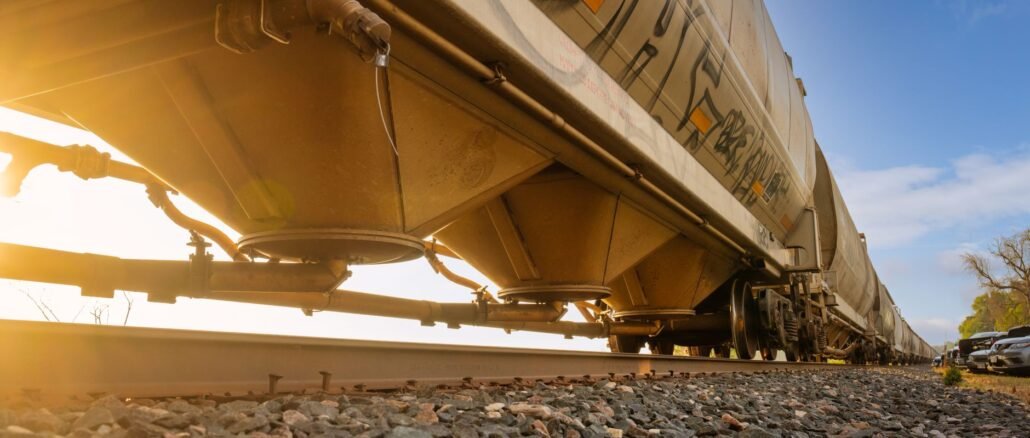
Dedicated freight corridors connecting India’s western and eastern industrial belts are now fully operational, according to a report from Currents, Economy published on September 9, 2026. The report calls this a major step for India’s logistics network, with the new routes running along the country’s major economic corridors to speed up transport times and improve reliability for businesses.
The corridors are one of the largest rail infrastructure projects tied to India’s freight network in recent years, built to separate freight movement from the passenger rail system that has long shared the same tracks. Their completion changes how goods move between India’s manufacturing hubs and its ports. It also changes who controls the pace of that movement: freight trains, not passenger schedules.
What the Western and Eastern corridors connect and carry
The Western and Eastern corridors form the backbone of the new freight network, each serving a different set of industrial and trade functions, according to the report. The Western corridor is built for India’s port-facing trade, moving containerized cargo and export-bound goods toward coastal gateways. The Eastern corridor serves the country’s coal, steel and heavy industrial belt, carrying bulk freight that has historically bottlenecked on mixed-use rail lines.
Together, the two corridors give Indian Railways a freight-specific network that runs parallel to its passenger operations rather than competing with them. That separation is the structural change at the center of the report: freight no longer has to wait for passenger trains to clear the line, and passenger services no longer get delayed by slow-moving freight rakes.
Route alignment along India’s major economic and industrial belts
Both corridors were routed to follow India’s existing economic geography rather than create new industrial zones from scratch, according to the report. The alignment runs through established manufacturing clusters, mining regions and port catchment areas, connecting production centers directly to the corridors rather than forcing goods to detour through congested urban rail junctions.
This choice determines who benefits first. Industries already sitting along the corridor routes, steel and cement producers in the east, auto and container-cargo exporters in the west, get the most immediate access to faster freight service. Businesses located off the corridor still depend on feeder lines and road transport to reach it, a gap the report addresses later.
Faster transit times and reliability gains for freight movers
The immediate, measurable benefit of the new corridors is speed, according to the report. Dedicated freight tracks let trains run at higher and more consistent speeds than on shared lines, where freight rakes routinely lose time waiting for passenger traffic to clear. The report also points to reliability as an equally significant improvement: businesses can plan around predictable delivery windows instead of building in buffer time for unpredictable delays.
For companies running just-in-time manufacturing or time-sensitive export schedules, that predictability changes operational planning. Freight movers no longer have to pad delivery estimates to account for the kind of scheduling conflicts that were routine on mixed passenger-freight lines. The report treats this reliability shift as a foundational input for the broader supply chain improvements it says the corridors enable.
Why lower logistics costs matter for manufacturing and exports
Lower logistics costs are central to why the corridors matter economically, according to the report, which links the freight network directly to manufacturing competitiveness and export performance. Transport and logistics expenses are a direct input cost for manufacturers, and any reduction in that cost either widens margins or allows lower pricing, both of which strengthen India’s position in export markets where it competes against other manufacturing economies.
The report frames this as particularly relevant given the current state of Indian manufacturing and trade. Lower freight costs make Indian-made goods more price-competitive abroad and reduce the domestic cost of moving raw materials and finished products between industrial hubs and ports. For sectors already operating on thin margins, such as bulk commodities and mass-manufactured goods, even modest reductions in transport cost can shift competitive positioning.
Indian Railways’ role and the shift of freight off congested passenger lines
Indian Railways sits at the operational core of this shift, according to the report, which credits the freight corridors with resolving a long-standing structural conflict on the national rail network: freight and passenger trains competing for the same track capacity. That competition has historically forced trade-offs, where increasing passenger service frequency came at the direct expense of freight throughput, and vice versa.
By moving freight onto dedicated corridors, Indian Railways can now run both freight and passenger operations with less interference between the two, the report notes. This is a structural fix rather than an incremental one: instead of optimizing scheduling within a shared, constrained system, the corridors physically remove freight traffic from the passenger network’s path. That frees capacity for Indian Railways to expand passenger services without freight capacity acting as the limiting factor, and to expand freight volumes without disrupting passenger timetables.
How businesses and supply chains are expected to respond
Businesses that depend on predictable, high-volume freight movement are the direct audience for this change, according to the report, which says the corridors support better supply chain management for companies operating along or near the routes. Faster and more reliable transit gives businesses more confidence in inventory planning, reduces the need for costly safety stock held to buffer against transport delays, and supports tighter coordination between production schedules and delivery commitments.
The report suggests the effects will extend beyond individual shipments to the broader structure of supply chains built around the corridors. Companies with the flexibility to route more of their freight through the new network stand to see the clearest gains, while suppliers, logistics providers and warehousing operators positioned along the corridor are expected to see ripple effects as freight volumes shift toward the new infrastructure.
What remains unresolved: capacity, last-mile links and the road ahead
The report treats the corridors’ operationalization as a milestone, not a finished project. Full realization of the benefits it describes, lower costs, faster transit and stronger supply chain performance, depends on how well the corridors integrate with the rest of India’s freight ecosystem, including the last-mile road and rail links that connect factories and warehouses to the corridor’s entry points.
That integration is the open question the report leaves for what comes next. Dedicated freight corridors solve the problem of moving goods quickly and reliably between major nodes, but they don’t by themselves solve the problem of getting goods to and from those nodes efficiently. Businesses and policymakers will need to watch whether feeder infrastructure, warehousing capacity near corridor access points, and coordination between road and rail freight keep pace with the corridors’ throughput. A fast trunk route bottlenecked by slow last-mile connections delivers only part of the promised gain.
Be the first to comment