
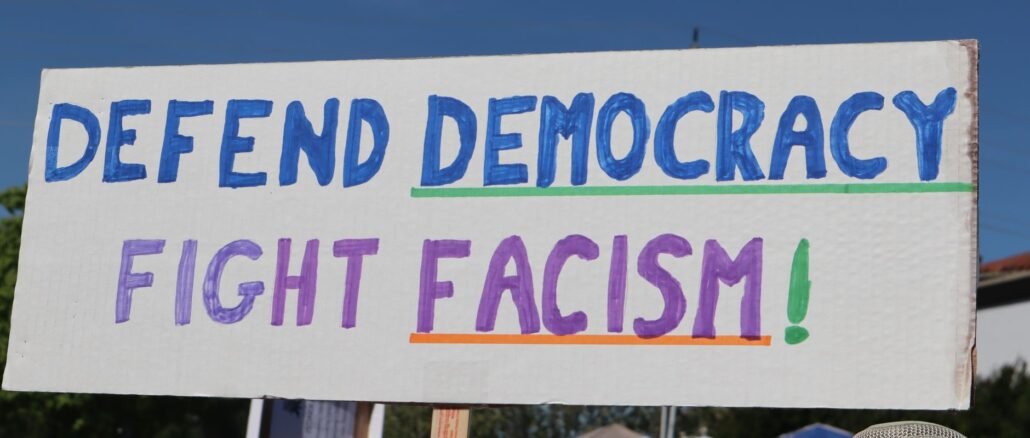
MANILA, Philippines. The Commission on Human Rights (CHR) marked the 54th anniversary of the declaration of martial law on Monday, Sept. 21, with a call to defend democracy from what it described as “abuse of power, corruption, injustice, and the distortion of truth.” The statement came on the anniversary of former President Ferdinand Marcos Sr.’s 1972 martial law declaration, and it framed the day less as historical remembrance and more as a warning tied to current conditions.
According to the CHR statement, as reported by Currents, Latest News, the commission said remembering martial law is not simply a look back but a demand for vigilance against threats it says persist today. That framing puts the anniversary in a present-day context rather than treating it as a closed chapter of Philippine history.
The statement: abuse of power, corruption, injustice, and distortion of truth
Four concerns, one warning
The CHR’s language centered on four specific concerns: abuse of power, corruption, injustice, and the distortion of truth. Each term corresponds to a category of harm the commission associates with the martial law period and, by its own framing, with conditions it sees recurring now.
The commission’s statement, issued Monday, argued that remembrance carries an active obligation. Rather than treating September 21 as a date for passive commemoration, the CHR framed it as a call to defend democratic institutions from the same patterns of behavior that marked the authoritarian period five decades ago. The statement did not treat martial law as an isolated historical event but as a reference point for judging present-day governance.
Why September 21 still matters: the 1972 declaration and its legacy
From Marcos Sr.’s martial law to today
September 21, 1972, is the date Ferdinand Marcos Sr. declared martial law across the Philippines, concentrating power in the executive and suspending civil liberties for years. The period remains a fixed reference point in Philippine political memory, invoked each year by human rights groups, survivor networks, and government bodies.
Fifty-four years on, the CHR’s decision to link that history directly to “present threats” shows the commission treats the anniversary as more than ceremonial. The statement suggests continuity between the abuses of that era and vulnerabilities in current democratic institutions, without directly equating the two periods. The commission’s phrasing, as conveyed in its Monday statement, leaves the specific present-day parallels open to interpretation while insisting that the core categories, abuse of power, corruption, injustice, and distortion of truth, remain live concerns.
CHR’s framing of current threats to democratic institutions
Connecting historical abuses to present-day concerns
The CHR did not treat martial law as a sealed historical episode. Its Monday statement explicitly connected the anniversary to what it called “present threats,” suggesting the commission sees certain conditions today as echoing the dynamics that enabled authoritarian rule in 1972.
By naming corruption and the distortion of truth alongside abuse of power and injustice, the CHR’s statement points to concerns that go beyond formal political repression. Distortion of truth, in particular, points to information integrity and historical accuracy, areas where the commission and allied groups have repeatedly raised concerns in past years over how the martial law period is remembered, taught, or represented in public discourse. Pairing a historical anniversary with a present-tense warning gives the CHR’s message a forward-looking tone rather than a purely retrospective one.
The Commission on Human Rights’ mandate and role in transitional justice
CHR’s past statements on martial law victims and historical accountability
The CHR is the constitutional body tasked with investigating human rights violations and advocating for accountability in the Philippines, a mandate that includes engagement with the legacy of martial law and its victims. The commission has historically documented abuses committed during the Marcos Sr. era and supported mechanisms for historical accountability tied to that period.
Monday’s statement fits a pattern of annual CHR commentary on the martial law anniversary, through which the commission has consistently framed September 21 as an occasion demanding more than symbolic recognition. Tying historical memory to current institutional concerns extends that pattern and reflects the CHR’s stated position that transitional justice remains an unfinished process.
Reactions and context: how the anniversary is observed nationally
Other groups and officials marking the date
September 21 is observed nationally each year by civil society groups, martial law survivor organizations, and government offices, which mark the anniversary through statements, commemorations, or public events. The CHR’s Monday statement is part of this broader annual pattern of institutional and civic engagement with the date.
The available reporting on this year’s anniversary centers on the CHR’s statement itself, without detail on parallel statements from other officials or organizations released the same day. What is clear is that the commission used its platform on the anniversary to issue a pointed warning rather than a purely commemorative message, consistent with how human rights bodies have historically used the date to press current political concerns.
What’s next: calls to action embedded in the CHR statement
The CHR’s Monday statement works as both commemoration and appeal. By naming abuse of power, corruption, injustice, and distortion of truth as the threats requiring active defense, the commission set specific terms for what vigilance should look like going forward, even without detailing specific policy demands or legislative asks in the portion of the statement summarized here.
The statement does not spell out exactly what concrete steps the CHR expects from government institutions, civil society, or the public in response. Its underlying point is that marking the anniversary means little if it stops at remembrance. The commission’s mandate includes guarding against a repeat of that history, so the question now is whether this year’s warning turns into monitoring, reporting, or advocacy the CHR can point to before the 55th anniversary arrives.
Be the first to comment