
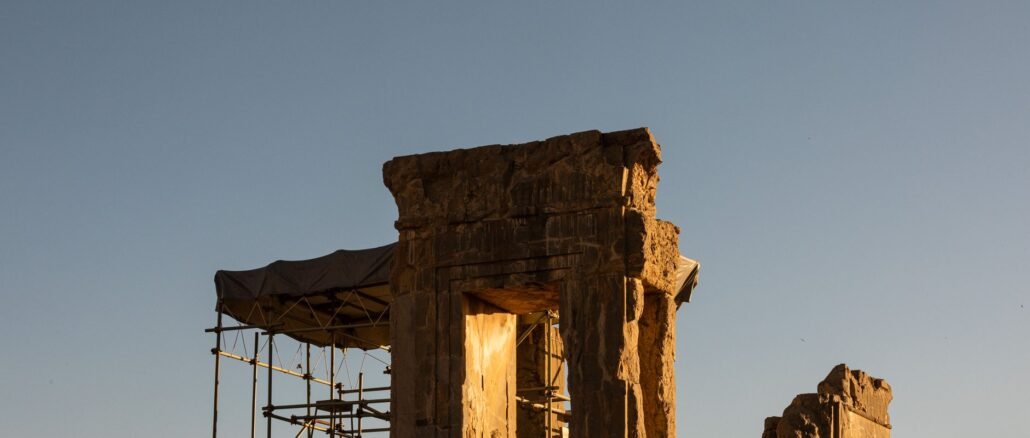
Reconstruction work at Sulaiman-Too will begin in October, Kyrgyzstan’s Minister of Culture Mirbek Mambetaliev told a parliamentary committee, according to 24.kg. He made the announcement at a meeting of the Zhogorku Kenesh Committee on Science, Education, Innovation, Information Technologies, Culture, Sports and Youth Affairs. It’s the first official timeline given for a project affecting one of the country’s best-known cultural sites.
Mambetaliev’s statement was brief and procedural, delivered during a committee session rather than a dedicated press event. The 24.kg report includes no further detail on budget, contractors, or which parts of the site are slated for work.
What the minister told the committee
The remarks came during a routine committee hearing, not a standalone announcement. The Zhogorku Kenesh Committee on Science, Education, Innovation, Information Technologies, Culture, Sports and Youth Affairs handles legislative and budgetary matters tied to cultural heritage, among other sectors, which makes it a fairly ordinary venue for updates on state-backed heritage projects.
According to 24.kg, Mambetaliev told committee members that reconstruction of Sulaiman-Too will begin in October. The report doesn’t say whether this refers to a particular structure, a broader area of the site, or surrounding infrastructure. As relayed by 24.kg, that single line was the extent of the public information released after the meeting.
The site at the center of the project
Sulaiman-Too is a mountain in the city of Osh, in southern Kyrgyzstan, and a UNESCO World Heritage Site. It has served for centuries as a place of pilgrimage and religious significance in Central Asia, and the surrounding area includes archaeological and historical features tied to that history.
Because of its protected status, reconstruction work here carries more weight than a typical municipal infrastructure project would. Changes to a UNESCO-listed site are usually subject to closer scrutiny, both domestically and internationally, given the preservation standards attached to the designation. Neither 24.kg’s report nor the minister’s comments addressed how the reconstruction fits with those obligations.
What’s confirmed and what isn’t
The confirmed fact is narrow: reconstruction begins in October. Mambetaliev’s statement to the committee, as reported by 24.kg, didn’t detail which parts of Sulaiman-Too will be affected, what materials or methods will be used, or which agencies or contractors are involved. There’s no mention in the available reporting of a project budget, a funding source, or whether the work involves foreign partners, domestic contractors, or both.
That gap matters given the site’s protected status. Reconstruction projects at heritage sites often involve multiple stakeholders, including preservation bodies and, for UNESCO sites, international consultation. None of that appears in the current reporting, so the scope of the project remains undefined beyond the timing itself.
October is also the only date on record. The minister didn’t specify a start date within the month, nor did he give an expected completion date or project duration. There’s no information on whether the October start refers to preliminary work, such as surveying or site preparation, or to substantive construction and restoration.
Based on the available report, the committee meeting was an update rather than a full project briefing. A single line about a start date, delivered in a committee session, isn’t the same as a published project plan with phases and milestones. Until more documentation is released, October is the only fixed point on the calendar.
Why this surfaced in a parliamentary committee
Government ministers routinely brief parliamentary committees on projects within their portfolios, and heritage and cultural affairs fall under the Zhogorku Kenesh Committee on Science, Education, Innovation, Information Technologies, Culture, Sports and Youth Affairs. That’s why Mambetaliev’s comment came up in a committee session rather than a ministry press release.
Meetings like this one typically serve an oversight function, letting lawmakers question ministers on budget allocations, timelines, and policy priorities. The setting suggests Sulaiman-Too’s reconstruction is likely tied to state funding or oversight, since it warranted a direct update to the legislature’s relevant committee rather than being handled purely as an internal ministry matter. Beyond that, the report gives no further detail on the committee’s specific interest in the project or what questions were put to the minister.
What comes next
No further details have been made public beyond the October start date confirmed to the committee. What hasn’t been disclosed, according to the available reporting, includes the scope of work, the budget, the contractors involved, and the expected duration of the project.
For a UNESCO-listed site like Sulaiman-Too, the next meaningful update should be a project plan or public notice specifying which areas of the mountain will be affected and how preservation standards will be maintained during construction. Until the Ministry of Culture or the Zhogorku Kenesh releases that information, October remains a date on the calendar with no defined plan attached to it.
Be the first to comment