
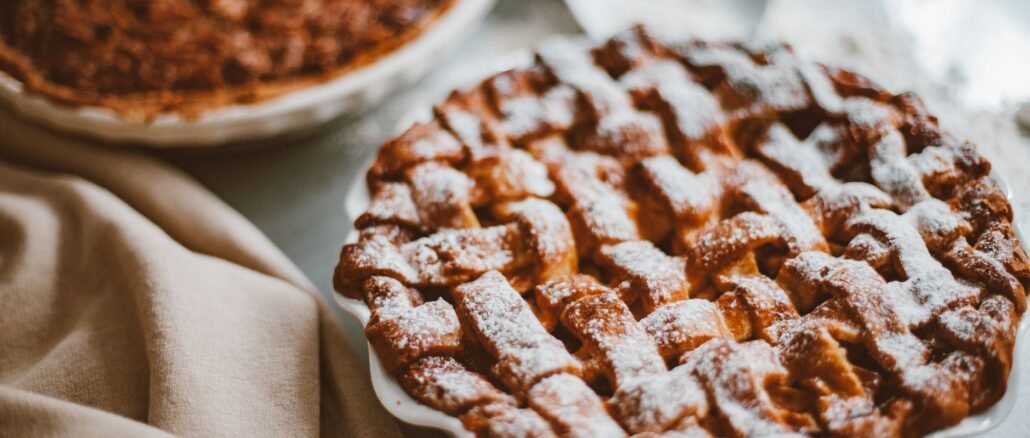
A flaky, golden crust. Apple juices bubbling through its vents. The scent of cinnamon filling a kitchen. That sensory description, published by Currents in the Winnipeg Free Press on September 8, 2026, opens a deeper question: why does a dessert with no native ingredients or origin in North America work as shorthand for the country itself? The phrase “American as apple pie” gets used in advertising, politics and everyday speech to signal wholesomeness and tradition, but the history behind the dish is more complicated than the slogan suggests.
The dish’s European origins complicate the “American” label
Apple pie did not originate in the American colonies. It crossed the Atlantic with settlers who already had centuries of pie-baking practice behind them, long before the United States existed as a political entity.
English and Dutch settlers brought pie-making traditions to the colonies
English cooks had been making fruit pies for generations before colonization began, using pastry crusts to encase fruit fillings as both a preservation method and a serving style. Dutch settlers carried similar traditions, including their own approaches to spiced fruit desserts. When these groups arrived in North America, they brought recipes and techniques that predated any notion of American cuisine. The pie itself is an import, not an invention.
Native apples were absent from North America before European contact
The apples tell an even starker story. No apple varieties suitable for the fruit pies colonists knew grew natively in North America before Europeans arrived. Settlers imported apple seeds and grafted trees, cultivating orchards that eventually spread across the colonies and beyond. Every element of the classic apple pie, the fruit and the crust technique alike, arrived from elsewhere. The “American” apple pie is a European dish grown in American soil.
How “American as apple pie” became a fixed phrase in the 20th century
The dish existed in America for centuries before anyone linked it to national character. That linguistic pairing came later, taking hold in the 20th century rather than at the country’s founding.
Wartime slogans linked pie to patriotism and soldiers’ motivations
During wartime periods, pairing apple pie with national purpose became a recognizable rhetorical device. Soldiers were often described, in period phrasing, as fighting “for Mom and apple pie,” a formulation that fused personal, domestic motivations with patriotic duty. That slogan compressed complex wartime sacrifice into two familiar, comforting images: a mother and a dessert. The phrase stuck because it was simple, sentimental and easy to repeat.
Advertising and postwar suburban culture cemented the association
Postwar suburban life gave the phrase further staying power. As advertising expanded and domestic consumer culture grew, apple pie became a recurring visual and verbal shorthand for stability, home and comfort. The dish fit neatly into a marketing vocabulary built around nostalgia and idealized family life. By the time “American as apple pie” became a fixed idiom, it carried decades of accumulated sentiment rather than any single origin point.
Mom, apple pie and the shorthand for wholesome domestic life
The phrase rarely stands alone. “Mom and apple pie” travels together as a linked pair, each half reinforcing the other’s meaning of home, safety and tradition.
The pairing of “mom and apple pie” as a cultural cliché
The coupling was repeated so often across film, advertising and casual speech that it hardened into cliché, an easy stand-in for anything considered essentially American. Invoking either half of the phrase, mom or apple pie, was often enough to summon the whole idea. That repetition is what made the phrase durable: audiences recognized it instantly, without needing explanation.
What the phrase reveals about gender roles tied to home cooking
The pairing also encodes assumptions about domestic labor. Baking, in this framework, sits within the home and within a mother’s role, tying a specific vision of gender and family structure to national identity. The dessert stands in for a particular, idealized domestic arrangement, one where home cooking is coded as maternal and pie-baking becomes an act of care tied to womanhood. That framing shapes how the phrase gets read: as a statement about who is expected to do the cooking, not just about the food itself.
The pie’s construction: crust, filling and aroma as cultural signifiers
Crust, filling and scent are not incidental details in the Currents piece’s description of the pie. They are the mechanism by which the dish triggers recognition and sentiment.
Why the golden, flaky crust became a visual marker of tradition
That kind of crust signals careful, traditional preparation. The visual cue, repeated across cookbook photography, advertising imagery and family gatherings, has become instantly readable as a marker of homemade authenticity. The crust is what makes the pie recognizable at a glance, before anyone tastes a single bite.
Cinnamon and bubbling apple juices as sensory triggers for nostalgia
Smell and sound are tied directly to memory, and a baking pie produces both. Apple juices bubbling through the crust’s vents and the scent of cinnamon filling a room, the sensory details described in the Winnipeg Free Press piece, recall childhood kitchens and family gatherings for many people. That sensory power is part of why the dish carries such emotional weight in cultural discourse.
Apple pie in politics, marketing and popular memory
Apple pie’s symbolic status has made it a recurring tool in political and commercial messaging, invoked whenever a speaker or brand wants to signal old-fashioned, unimpeachable American values.
Brands and campaigns invoking apple pie to signal Americana
Companies and campaigns have long reached for apple pie imagery to project reliability and tradition. The dish’s association with home and comfort makes it a convenient visual shortcut, one that requires no explanation to audiences already fluent in the phrase’s meaning. Its recurring use across decades of marketing shows how thoroughly the symbol has been absorbed into commercial language.
The dish’s recurring role in disputes over what counts as “authentic” American food
Apple pie also surfaces regularly in arguments over what actually counts as authentic American food. Because its European roots are well documented, the dish becomes a go-to example in those disputes, the foods held up as most quintessentially American often carry the deepest immigrant and foreign influence.
The gap between the myth and the dish’s actual immigrant and global roots
Apple pie is treated as a native emblem while its ingredients and techniques point elsewhere entirely. That gap between symbol and history runs through the whole story of the dish.
Historians’ pushback against apple pie as a purely native invention
Historical accounts consistently reject the idea that apple pie originated in America. The pastry techniques came from English tradition, the flavored variations from Dutch settlers, and the apples themselves from imported stock, not indigenous growth. Calling the dish a purely native invention ignores the documented path each of its components took across the Atlantic.
What the symbol obscures about America’s culinary diversity
That gap between myth and history points to a broader truth about American food generally: much of what gets labeled “traditional” American cuisine is the product of blended, imported and adapted traditions rather than a single point of origin. Apple pie’s status as a national symbol says less about the dish’s actual roots and more about how effectively a simple, comforting food can be repurposed into a story a country wants to tell about itself. The pie reveals more about American identity as a constructed narrative than as a culinary fact.
Be the first to comment