
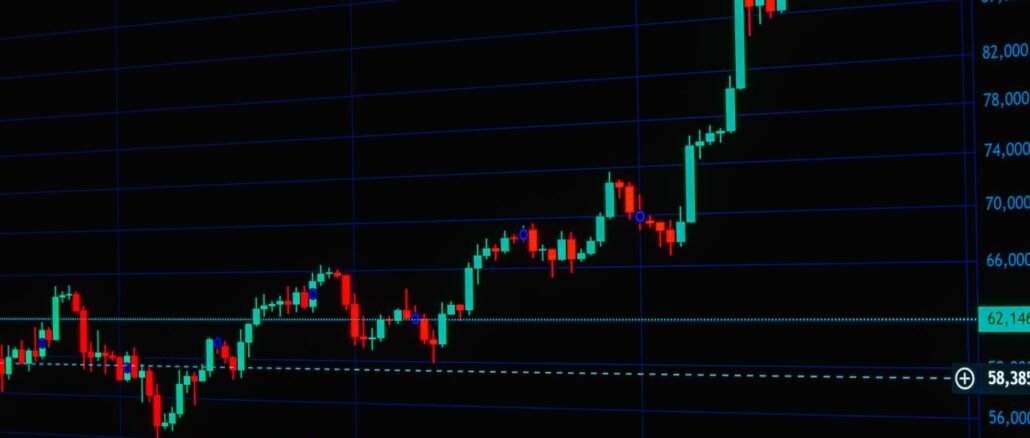
CoreCivic shares climbed to $34.88 on Monday, a new 52-week high for the private prison operator, according to Investing.com. That puts the stock at its highest trading level in a year, a threshold that tends to draw fresh attention from retail and institutional investors tracking momentum in the corrections and detention sector.
The report, published by Investing.com’s Currents desk under Business & Finance, gave no additional detail beyond the price level and the fact that it’s a new 52-week peak. No trading volume figures, analyst commentary, or company statements came with the announcement.
What the milestone means for CoreCivic’s market value
A 52-week high is a technical marker, not a verdict on a company’s underlying business. It just confirms that CoreCivic’s share price hasn’t traded this high at any point in the trailing twelve months. For a stock like CoreCivic, whose price has moved through cycles tied to federal immigration policy and detention capacity needs, hitting a new ceiling often has more to do with shifting expectations about government contracting than any single piece of company news.
Investors watching the stock will now look at how it behaves around this level. A push through $34.88 with sustained volume would suggest buyers are willing to pay up for future earnings. A pullback, on the other hand, could mean the level was simply a resistance point the market tested and rejected. Investing.com’s report didn’t say what triggered Monday’s move, leaving the context to sector trends and prior contract news that have shaped CoreCivic’s valuation over recent quarters.
Inside CoreCivic’s business: private prisons and detention contracts
CoreCivic operates correctional, detention, and residential reentry facilities across the United States and is one of the largest private operators in an industry built almost entirely on government contracts. Its facilities house federal inmates, state prisoners, and detainees held under immigration enforcement agreements.
That business model ties CoreCivic’s financial performance directly to policy decisions made in Washington and in state capitals. Contract renewals, bed-count adjustments, and enforcement priorities set by federal agencies can move the company’s revenue outlook more than a quarterly earnings report does. That dependency is a big part of why CoreCivic’s stock has historically reacted sharply to shifts in immigration enforcement policy and corrections budgets.
Revenue tied to federal and state incarceration contracts
CoreCivic’s income depends heavily on occupancy levels and per-diem rates negotiated with government partners, including the Federal Bureau of Prisons, the U.S. Marshals Service, and Immigration and Customs Enforcement. State corrections departments also contract with the company to manage overflow populations or entire facilities. Because these agreements are often multi-year and subject to renewal or renegotiation, any change in enforcement priorities or budget allocations can directly affect CoreCivic’s top line. That link between the company’s fortunes and federal policy helps explain why its stock trades the way it does, including the run to Monday’s 52-week high.
The private prison sector’s recent stock performance
Private prison operators have seen renewed investor interest tied to expectations around detention capacity and enforcement funding. CoreCivic and its peers have periodically traded on news related to government contract awards, facility reactivations, and shifts in federal immigration enforcement posture. The specific catalyst behind Monday’s move to $34.88 wasn’t detailed in the Investing.com report, but the broader sector has shown sensitivity to policy signals coming out of Washington.
Beyond CoreCivic, the private detention and corrections industry remains a small but closely watched corner of the market. Because these companies rely on relatively few large government clients, their stocks can move more sharply on contract-related news than diversified industrial or service companies. That concentration risk cuts both ways: it can produce outsized gains when contracts expand, and outsized losses when they don’t.
Reading the 52-week high: what it signals and what it doesn’t
A new 52-week high tells investors that current buyers are more optimistic than anyone has been in the past year, at least at the margin. It doesn’t confirm that CoreCivic’s earnings, contract backlog, or occupancy rates have improved. The Investing.com report cited only the price level, with no accompanying data on revenue, guidance, or contract wins that might explain the rally.
That distinction matters for anyone using the milestone as an investment signal. Technical price levels like 52-week highs are widely tracked by momentum traders and algorithmic strategies, which can create self-reinforcing buying as the level is broken. Fundamental investors, by contrast, will want to see the underlying financial results, typically disclosed in the company’s next quarterly filing, before drawing conclusions about whether the higher valuation is justified.
Trading milestones versus long-term financial health
Stock price milestones and balance sheet health are related but not the same thing. CoreCivic’s share price can rise on sector-wide enthusiasm, short covering, or speculative positioning even if its underlying contract base hasn’t changed. A company can also improve its financial footing without an immediate change in its stock price, if the market hasn’t yet priced in the improvement.
For CoreCivic specifically, whether Monday’s high holds will depend on factors not addressed in the Investing.com report: whether the company’s existing contracts remain intact, whether occupancy rates at its facilities hold steady, and whether new government agreements materialize in the coming quarters. Until those factors are confirmed through company disclosures, the 52-week high is a market data point, not a verified improvement in fundamentals.
What investors are watching next
The next scheduled catalyst for CoreCivic shares will likely be the company’s upcoming quarterly earnings report, where management typically updates guidance on occupancy, contract status, and capital allocation plans, including any share buybacks or dividend adjustments. Until then, traders will watch whether the stock holds above the $34.88 level or retreats, since sustained trading above a fresh 52-week high often draws additional momentum buyers.
Broader policy developments will also stay on investors’ radar. Announcements from federal agencies regarding detention capacity, contract renewals, or enforcement funding levels have historically moved CoreCivic’s stock, and the sector’s recent price action suggests the market remains attentive to those signals. Investors weighing a position in CoreCivic will need to balance the near-term technical strength shown by Monday’s high against the longer-term uncertainty tied to the government contracting cycles that define the company’s revenue base.
Quick facts: CoreCivic’s 52-week high at a glance
CoreCivic Inc shares reached $34.88 on Monday, according to Investing.com, a new 52-week high for the stock. The report was published by Investing.com’s Currents Business & Finance desk. CoreCivic is a private operator of correctional, detention, and reentry facilities under contract with federal and state government agencies. No additional detail on trading volume, company statements, or specific catalysts came with the report. Investors looking for confirmation of whether the price move reflects improving fundamentals will need to wait for CoreCivic’s next quarterly disclosures.
Be the first to comment